
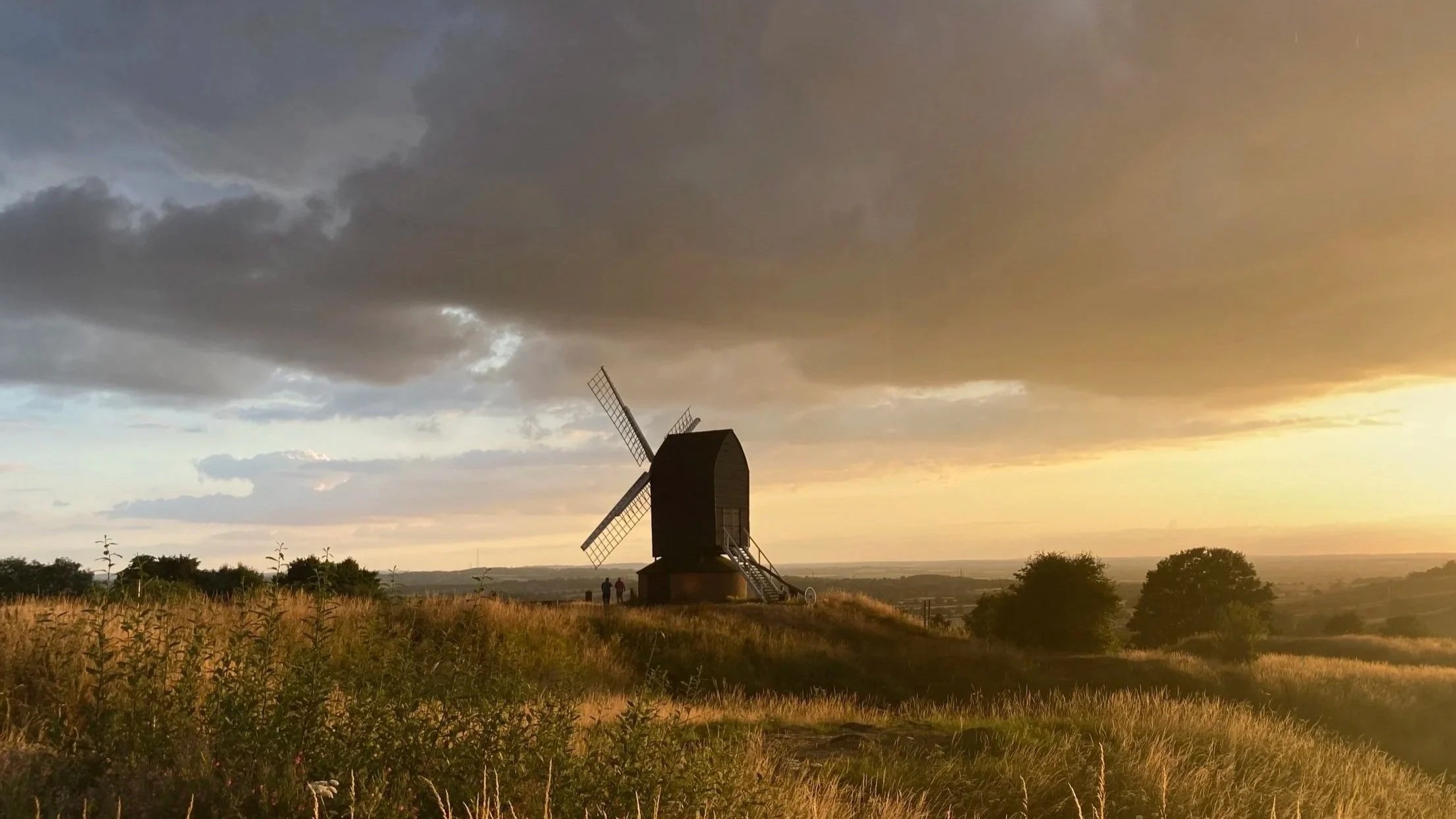
Brill Common & The walks
Brill Common covers 74 acres to the north and north-west of Brill. Although mainly unimproved grassland, the common includes a variety of environmentally important habitats. Living on or adjacent to the Common brings certain obligations. The Walks, a designated Village Green, is an enclosed area of woodland adjacent to the Common. Management of these two areas is overseen by the Brill Common and Village Greens Advisory Group.
Brill Common
If Brill Windmill is the jewel in Brill’s crown, then Brill Common is the crown itself. Many villages have commons but few have one of such variety; open grassland, hawthorn copses and shady dingles, impenetrable woodland, meandering footpaths and hidden ponds. Managing the common in a way that meets the needs of wildlife and the environment - and residents and visitors - is one of the parish council’s greatest and most enduring challenges.
Brill Common has an unusual spider-like form. Although most of the 74 acres is concentrated around the village, there are strips of common land along all the access roads, plus two other long legs; one reaching almost to Oakley, the other stopping just short of Boarstall Wood. The Square (actually an elongated triangle) in the centre of Brill is also common land. See map at the foot of this page.
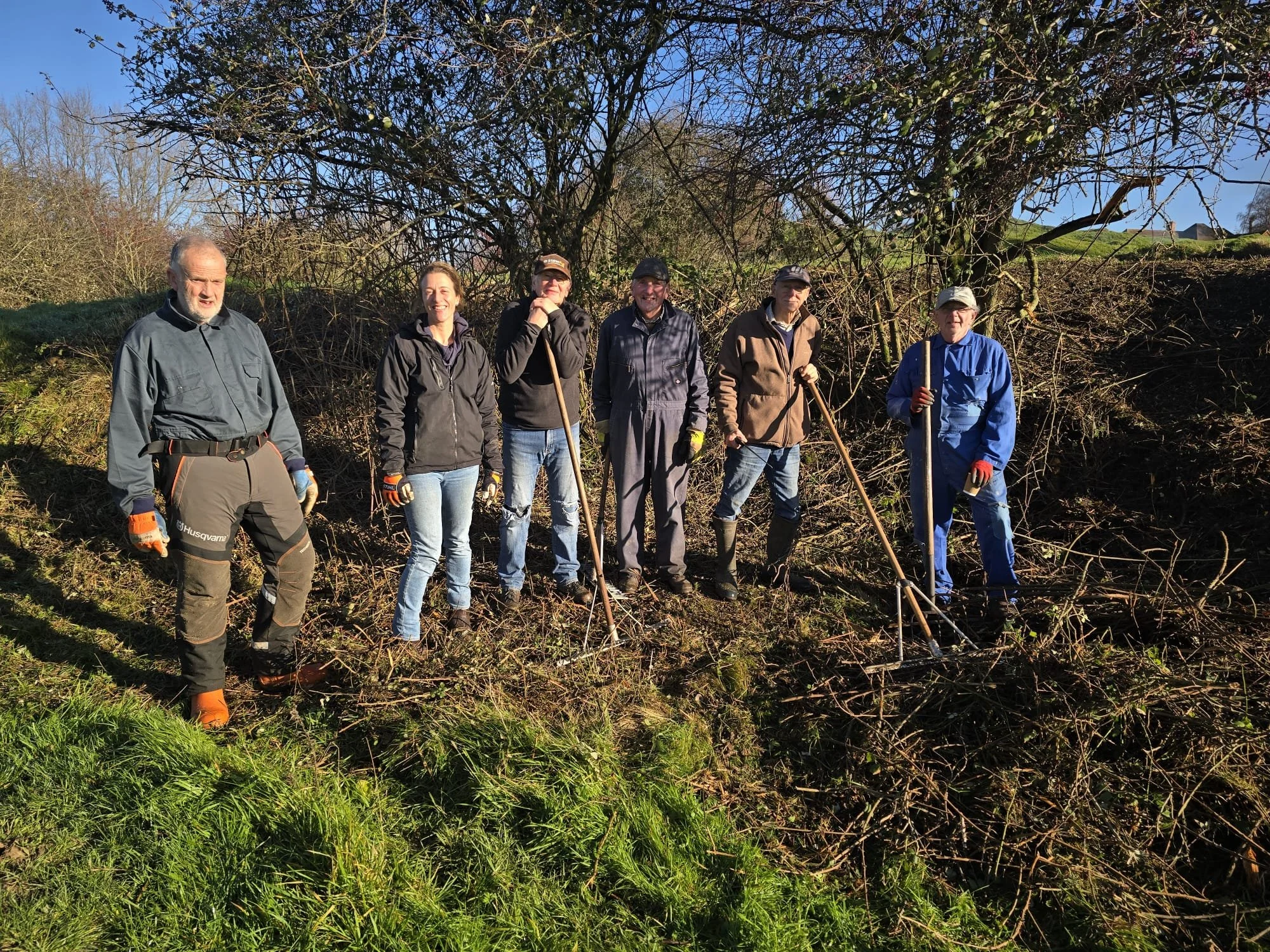
Volunteers working on Brill Common, late 2025.
Management
We are very fortunate to have an army of committed volunteers who work with enthusiasm and skill to protect and conserve the common. The work of these groups is now coordinated by the Brill Common & Village Greens Advisory Group. This group was set up in the wake of 2022’s report on the management of Brill Common (pdf opens in new tab), produced by the Berkshire, Buckinghamshire & Oxfordshire Wildlife Trust (BBOWT) Land Advice Service. The Advisory Group meets quarterly and their minutes are published on this website.
Late in 2025, the Parish Council appointed a Wildlife and Community Ranger to provide consistent and professional input to the management of the common for years to come. This role is funded by the National Lottery Heritage Fund.
Brill Common is made up largely of ‘unimproved grassland’; permanent grassland that has not been cultivated or received artificial fertiliser for many years. This is the single most threatened type of grassland habitat in the UK. To find out more about the herd of Dexter cattle which helps maintain the rare habitat and incredible bio-diversity of Brill Common, visit the Brill Village Community Herd website (opens in new tab).
We were thrilled when the Community Herd was awarded The KIng’s Award for Voluntary Service in 2023. Equivalent to an MBE, the KAVS is the highest award a local voluntary group can receive in the UK. It recognises volunteers who contribute to their local communities and work to make life better for those around them.
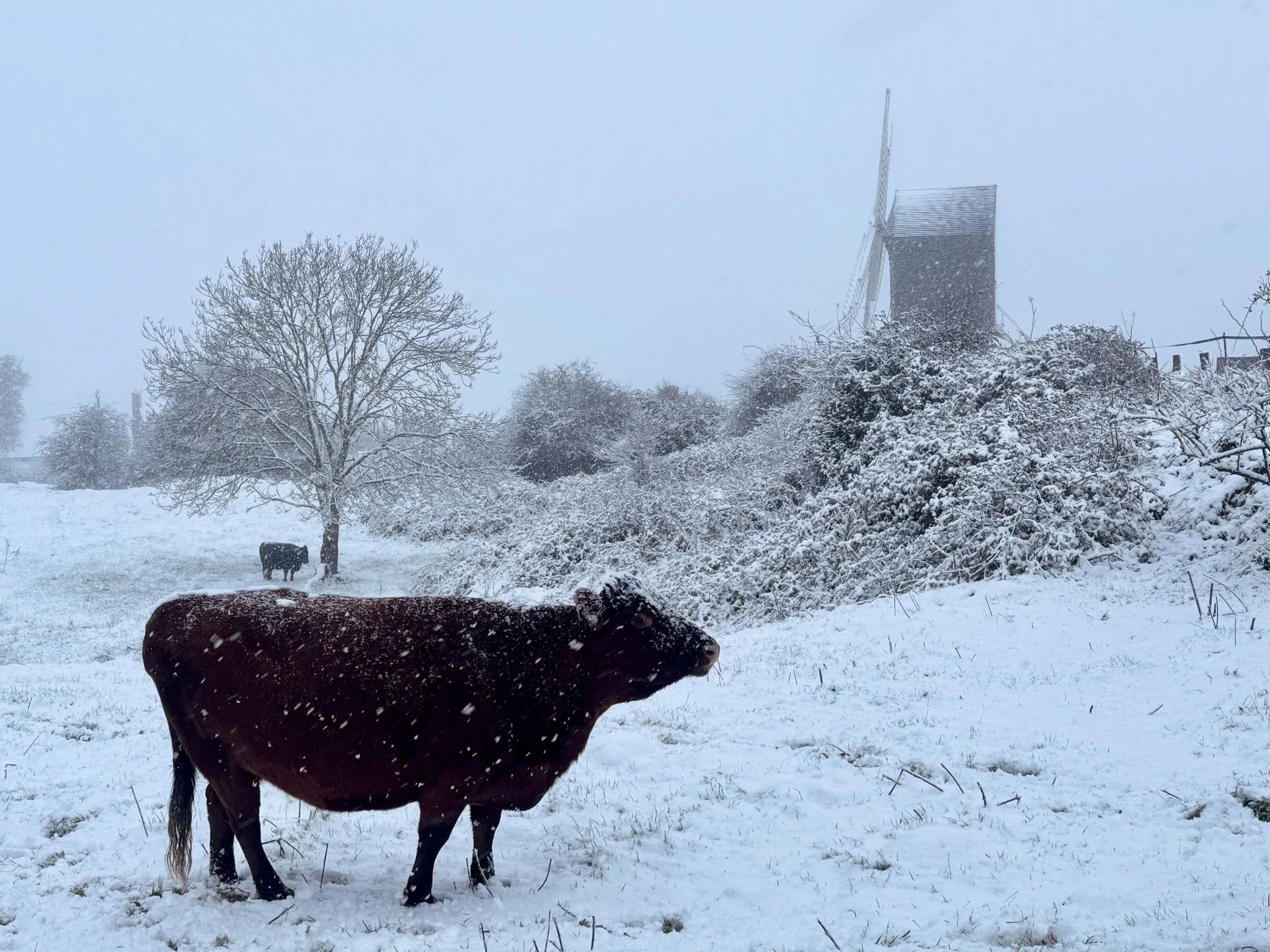
One of the Dexter cows by Brill Windmill
Living on the Common
Living adjacent to common land brings many pleasures - and some restrictions. These restrictions are designed to maintain this landscape in optimal condition for the benefit of all, now and in the future. Please see the parish council’s Brill Common and Walks Policy (pdf opens in new tab) and Encroachment Policy for further information, and find out how to apply for permission to carry out work or hold events on common land.
This Legal Topic Note from the National Association of Local Councils (pdf opens in new tab) sets out the general legal principles pertaining to the protection of common land. Please note that this is a general document; it is not specific to Brill Common. This section on the Open Spaces Society’s website (opens in new tab) is also very helpful.

Looking across The Walks from the gate that divides the two sections. The pond is home to Great Crested Newts.
The Walks
The Walks is wild, park-like area (marked in green on the map below) adjacent to Brill Common but enclosed on the other three sides by streets and houses. It’s an area of mainly mature, well-spaced trees; quite different from the adjacent Common. We think that there was once a manor house in The Walks although nothing remains of this except a few lumps and bumps and the lovely park-like atmosphere. The tall trees are a distinctive landmark on the top of Brill Hill, visible from miles around.
The Walks - note the definite article - are not technically part of Brill Common. The Parish Council purchased this areas from Buckingham County Council in 2015, using council funds and private donations. It is now a registered Village Green. (The Green, a lovely open space adjacent to All Saints Church, is also a registered Village Green.) Management of The Walks is now overseen by the Brill Common and Village Greens Advisory Group and our Wildlife and Community Ranger.
The legislation controlling Village Greens originated in the 1850s with the aim of preventing any encroachments or other changes that would interfere with parishioners’ right to “lawful sports and pastimes”. These two Legal Topic Notes from NALC explain this complicated subject in more detail:
The Provision of Play & Sports Equipment on Village Greens (pdf opens in new tab)
Easements over Common Land & Village Greens (pdf opens in new tab).
And here’s some more information:
Map of Brill Common and The Walks
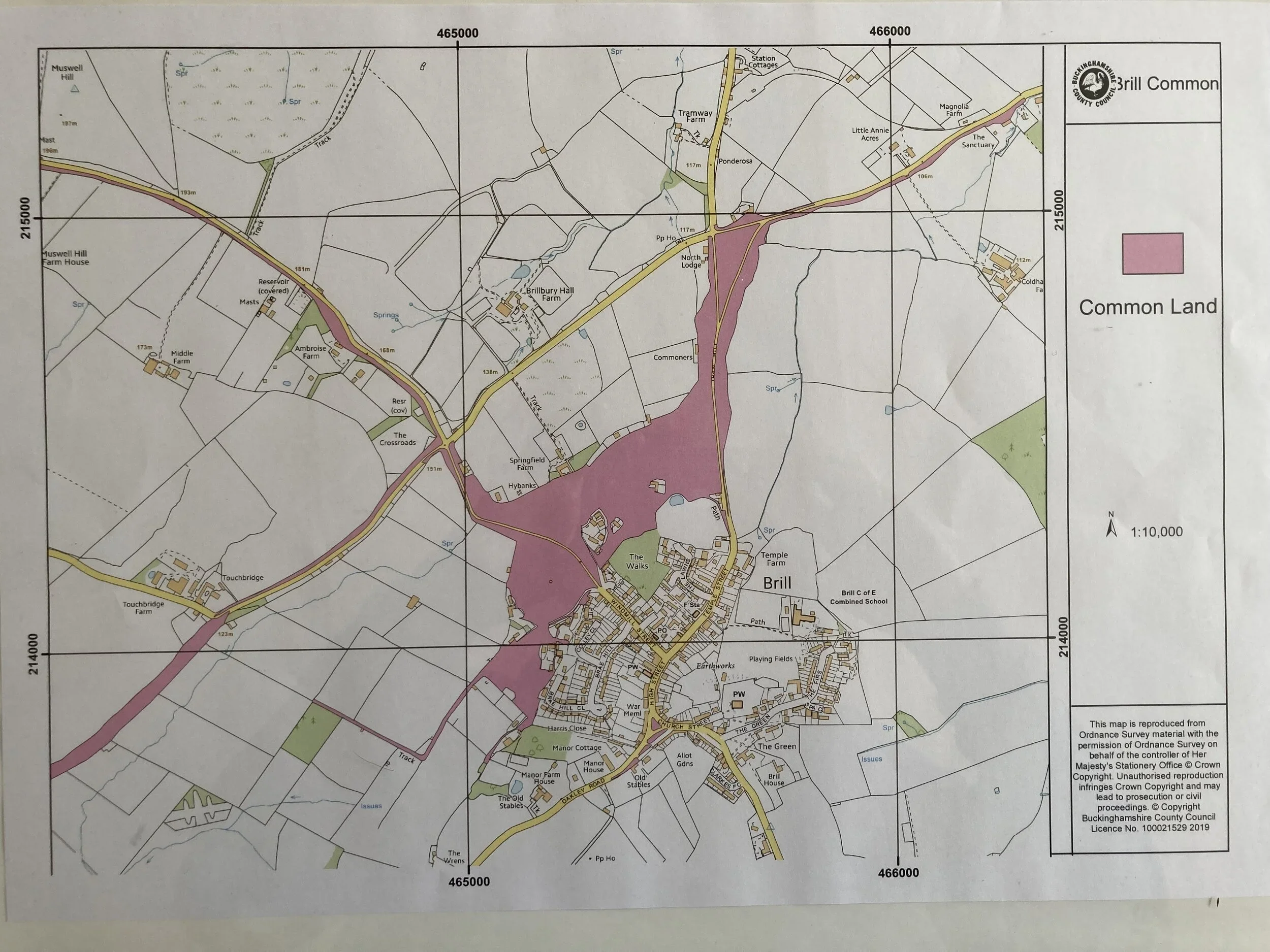
Missing from this map is the long strip of common land off Oakley Hill which joins up with the pink area on the left of the map originating at Touchbridge Farm.