

January brings a natural pause, reminding me to slow down and notice winter’s understated resilience and the promise it holds. I’ve always had a fondness for this month - and not just because I celebrate my birthday (and, hopefully, a husband-funded dinner out!) - but also because the recent clear blue skies, hard frosts, and even snow make it the perfect time to observe wildlife and reconnect with the landscape.
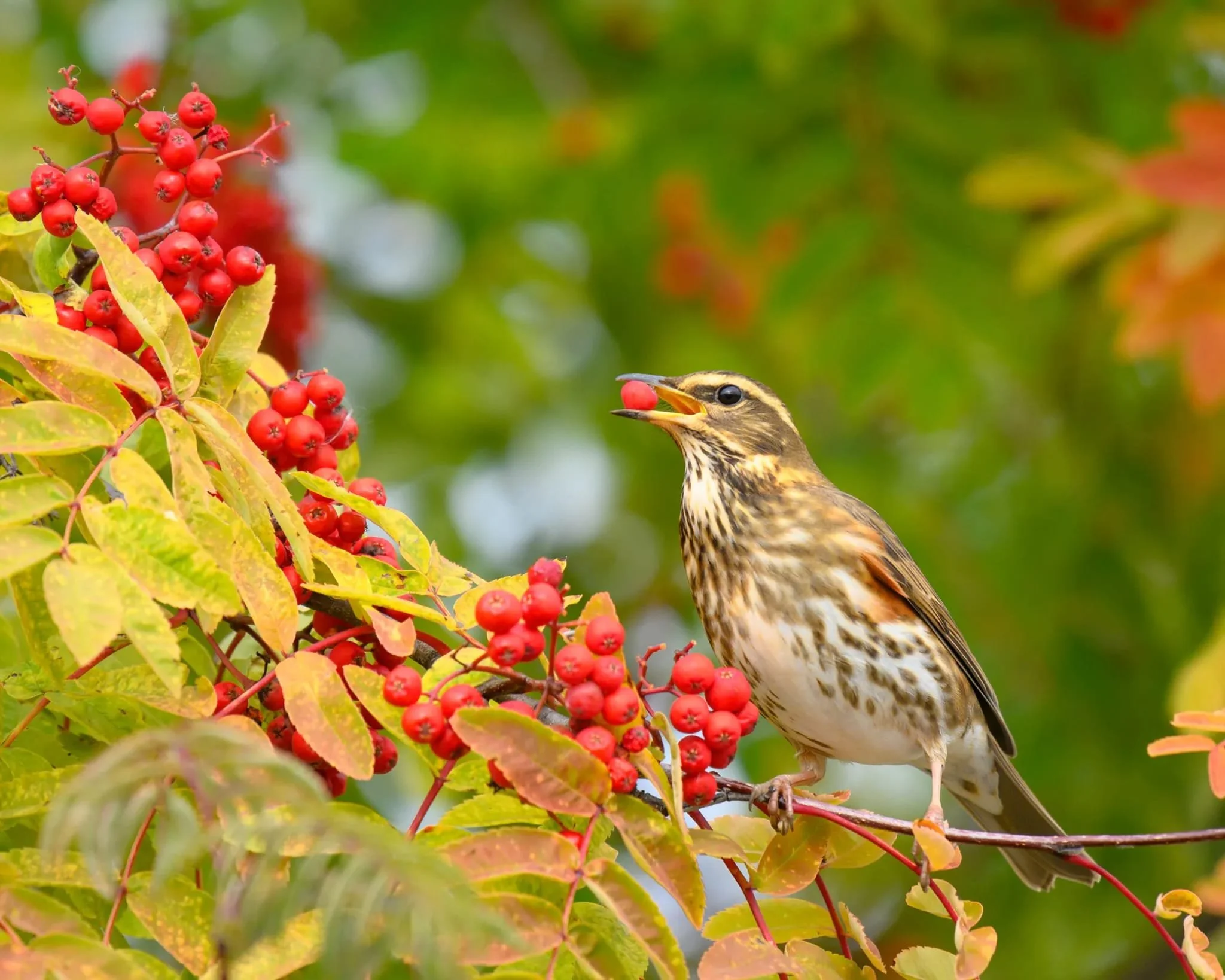
Redwing; a Scandinavian visitor enjoying our wild fruit and berries. All the bird pictures in this month’s newsletter are from the brilliant RSPB website.
After time off over the festive period, my first week back at work has been up-lifting. By allowing space for stillness - listening carefully and observing closely - I’ve recognised bird calls I hadn’t heard in a long time, reminding me of the importance of patience in conservation work. Not everything is immediately visible. In conservation progress is often measured through careful observation over time, with results emerging gradually as consistent management takes effect.
So which species have piqued my interest this month?
I was first drawn to some high pitched reedy “tseep” calls from the treetops bordering the common. Using my trusty binos, I confirmed these to be flocks of Redwings (Turdus iliacus) the smallest of our thrushes and regular Winter visitors from Iceland and Scandinavia, here to feed on our fruit-laden trees and shrubs. Although Redwings are a gregarious species they’re very skittish and the flock will fly off as one when disturbed.
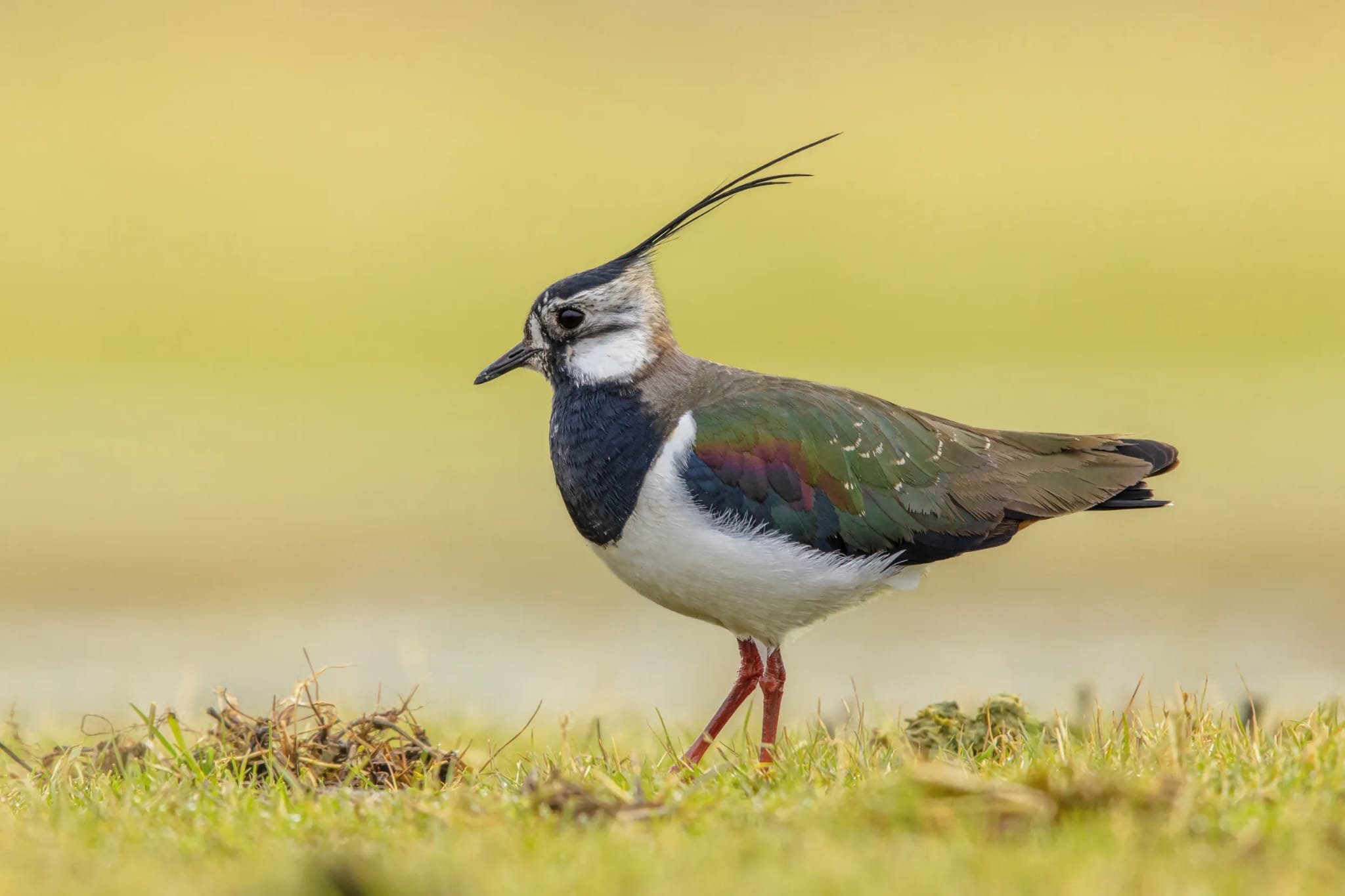
Lapwings are native to the UK and feed mainly on earthworms, leatherjackets, and insects and their larvae.
It was then I recognised another call; a distinctive “tow-ip” carrying across the adjacent fields. I peered over a gate and was thrilled to see a flock of around ten Lapwings (Vanellus vanellus). The Lapwing is a Plover species, instantly recognisable by its striking black crest and bold black-and-white underwings, clearly seen during their characteristic buoyant, tumbling flight. Lapwings breed and over-winter on arable fields and salt marshes. Although native to the UK, their numbers have declined significantly in recent decades.
What a New Year’s treat!
January reminds us that not all progress is visible or immediate. In the quieter months, when the land appears dormant, stillness becomes an essential tool - allowing us to listen, observe, and appreciate. It is in these moments of attention that connections are renewed, knowledge deepens, and hope quietly takes hold. This is the rhythm of conservation work, and one of the many reasons I love this work.
Wishing you all a very Happy New Year, with time to notice nature, appreciate its resilience and renewal, and remain present in the landscapes around us.
NEW! SURVEY ON BRILL COMMON ACTIVITIES & EVENTS
I’d love to share Redwings, Lapwings and all the other wildlife on Brill Common with you - but how best to do this? I’ve got lots of ideas but I need to hear from you! Please take two minutes to complete my survey on this website and we’re start planning.